An electric fence only works if three things are right. The energiser must suit your fence length. The fence must be zoned so faults are easy to find. And the installation must meet SANS 10222-3 so it can be certified.
Get one wrong and you get a fence that trips after every storm, fails inspection, or simply doesn't deter anyone. This guide covers each step in the order you'll need it, from sizing to backup power.
How an electric fence works
A fence is a deterrent, not a barrier
An energiser sends a short, high-voltage pulse along the fence strands, about once a second. Each pulse lasts a fraction of a millisecond. That's what makes the shock sharp but brief. Anyone who touches a live strand feels a painful jolt and pulls away. They aren't held on the fence.
The rest of the system (strands, poles, insulators and earthing) carries that pulse around the perimeter and back to earth.
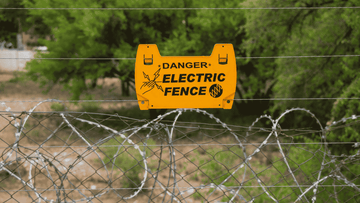
Remember: Warning signs are a legal requirement. In urban areas they must be no more than 10 m apart, with signs at every gate, so people, including children, are warned before they touch the fence.
One layer of a bigger system
An electric fence works best alongside security cameras covering the same boundary and an alarm that reports a breach to you or your armed response company. Plan these three together, not as separate purchases, and you have seamless protection.
Energisers: joules, power and sizing
What the joule rating tells you
The joule rating is the energy in each pulse, measured by two figures. Stored energy is what the energiser holds. Output energy is what it delivers into a load and is what you need to compare.
More output helps a pulse stay strong over a long run, especially where plants touch the wire. But bigger isn't always better. In urban areas, the law caps energiser output at 8 joules per pulse, so only buy energisers approved for the South African market. An uncertified import may not meet the limits and won't pass inspection.
Mains, solar or battery
- Mains-powered energisers are the standard choice for homes and estates, with a backup battery for power cuts.
- Solar-powered energisers work for sections with no nearby mains supply, such as a back fence on a smallholding.
- Battery-only energisers, usually on a 12 V deep-cycle battery, suit short or remote runs where neither option is practical.
Match output to total wire length
Every energiser has a rated fence length. Check that figure against your total wire length, which is your perimeter length multiplied by the number of strands. For example, a 100 m perimeter with 6 strands is 600 m of wire.
An energiser rated for a short garden wall will struggle on a 400 m estate boundary, even if it switches on and runs. The pulse weakens over distance and with every leaf or wet patch touching the wire.
Don't buy on joules alone. Check the rated length. It's the mistake we see most.

Zones and zone monitors
What is a zone?
A zone is a section of fence wired back to its own terminal on the energiser or zone monitor. If a branch falls on the wire, a connection works loose or someone cuts a strand, the fault shows on that zone, not the whole fence. Finding it becomes a quick look at a screen instead of a full boundary walk.
LCD zone monitors
An LCD zone monitor shows the voltage on each zone in real time. It's usually mounted near the energiser, or at the guard house on larger properties. When one zone drops below its normal range, the monitor flags it. Your alarm panel can read the same signal (more on that below).
How many zones you need
Most standalone houses need one or two zones. Estates, complexes and commercial sites usually split the perimeter into zones of about 150 m to 300 m, so security staff can go straight to the flagged section. Your installer will set the final layout based on terrain, plants and how the site is patrolled.
SANS 10222-3 and your EFC
What the standard covers
SANS 10222-3 is the South African standard for electric security fences. It covers energiser limits, construction, earthing, strand spacing and signage. During testing, installers check the voltage along the fence, including the far end of each zone. A weak reading there means the deterrent fades exactly where you need it most.
What an EFC is and when you need one
An Electric Fence System Certificate (EFC) confirms that your fence meets the standard. A registered installer issues it after testing the system on site. You need one for every new installation and for alterations such as extending the fence or replacing the energiser. Minor repairs, like fixing a broken wire, don't need a new one.
You also need one to sell your home. The Electrical Contractors' Association confirms this applies even to fences put up before the rules came into effect in October 2012. A valid EFC can pass to the buyer, but only if the fence hasn't been changed since it was issued. Many insurers also ask for one before paying a claim.
Who can install and certify
Only an electric fence installer registered with the Department of Employment and Labour can issue an EFC. Faults like poor earthing, wrong strand spacing or an out-of-range energiser aren't always easy to spot, and registered installers are trained to test for them. You can fit the components yourself, but confirm before you start that a registered installer will inspect and certify the finished fence.
Wire, strands and spacing
Strand count and spacing
How many strands you need depends on whether the fence sits on a wall or stands on its own. This table shows typical setups in South African homes and estates. Live wires on a wall must sit at least 1.5 m above the ground, so lower walls need more strands to make up the height.
Your installer will confirm exact spacing against SANS 10222-3 on site.
| Fence type |
Typical strand count |
Typical spacing |
Common use |
| Low wall (under 1.2 m) |
4 to 6 strands on top |
100 to 150 mm |
Townhouse complexes, low garden walls |
| Standard wall (1.2 m to 1.8 m) |
3 to 4 strands on top |
150 to 200 mm |
Most home boundary walls |
| Freestanding fence (no wall) |
8 to 10 strands |
100 to 150 mm |
Smallholdings, open boundaries |
| Estate or commercial perimeter |
6 to 8 strands, zoned |
About 150 mm |
Estates, complexes, commercial sites |
Choosing wire
- Aluminium wire is the most common choice on wall-top fences. It conducts well, doesn't rust and is easy to work with.
- Stainless steel is tougher and suits coastal or high-risk sites, at a higher price.
- High-tensile galvanised steel holds tension well over long freestanding runs.
Why tension matters
A slack strand can touch another strand or a plant and set off false alarms. It also drags down the voltage on that zone. Re-tensioning after a few years is normal maintenance, not a sign of a bad installation.
Earthing
The pulse needs a good path back to earth to give a proper shock. That path is a set of earth spikes driven into the ground, connected to the energiser. Too few spikes, spikes in dry or sandy soil, or corroded connections all weaken the fence, even with a strong energiser. Earthing is one of the first things an installer tests, and one of the most common reasons a fence fails inspection.

Backup power
Sizing a backup battery
A backup battery keeps a mains-powered energiser running during power cuts and load shedding. Battery size is measured in amp hours (Ah). Runtime is roughly the Ah rating divided by the energiser's current draw, less a margin for battery age and heat.
Solar top-up
A small solar panel can keep the backup battery charged on sites with frequent outages, or on sections too far from the house for mains power. It doesn't replace the battery. It stops the battery running flat over several days of outages.
Linking the fence to your alarm and gate
Using the fence as an alarm zone
Most zone monitors have a relay output that connects to a spare zone on your alarm panel. When a strand is cut or pulled to earth, the alarm responds just like any other zone. The fence then detects intruders as well as deterring them.
Not sure whether to start with a fence, an alarm or cameras? Our guide to CCTV vs alarm systems and which to install first explains how to phase them on a budget.
Gates
Where the fence meets a gate, a gate contact lets you safely isolate that section without leaving a gap elsewhere. If you have an automated gate, plan it with the fence at installation. Otherwise, the gate often ends up as the one unprotected spot on the boundary.
What affects the cost
Four things drive the price of an electric fence:
- Total wire length
- The number of zones and monitors
- The wire type
- Labour for installation and certification
Wall-top fences on a standard home cost far less than a freestanding estate perimeter. Ask for quotes that include the EFC, so there are no surprises at sign-off.

Choosing a kit
Once you know your wire length, zone layout and backup needs, you can pick components. This is where most self-builds go wrong. Parts bought one at a time don't always match, and a mismatched energiser or monitor is a common reason a fence fails its first inspection.
That's why we put together ready-to-install electric fence kits using genuine Nemtek components. The energiser, strands and monitor are already matched to common fence lengths. Every kit comes with official local warranties and technical support if your installer has a sizing or compliance question on site.
Frequently asked questions
How many joules do I need for my electric fence?
Work out your total wire length (perimeter length × number of strands), then choose an energiser rated for at least that length.
Is an electric fence legal in South Africa?
Yes. It must be installed to SANS 10222-3, have the right warning signs and be certified by a registered installer.
Do I need an EFC for my electric fence?
Yes, for every new installation or major alteration. You also need one to sell a property with an electric fence, even an older one.
Can I install an electric fence myself?
You can fit the components, but a registered installer must test the fence and issue the EFC.
What is the difference between an electric fence and an alarm?
An electric fence deters intruders at the boundary. An alarm detects them and sends an alert. Connect the fence's zone monitor to your alarm and you get both.
How long will my fence battery last in a power cut?
A 7 Ah battery usually covers a 2 to 4 hour outage on a typical home energiser. Size up, or add a solar top-up, if outages are long or frequent.

Get it right the first time
A good electric fence comes down to matching the energiser, zones, wire and earthing to your perimeter, then getting it tested and certified properly. Browse our matched electric fence kits, or speak to our technical support team if you need help with fence length, zones or energiser sizing before you order.
```